Reading a Street Scene Before You Press the Button
A workshop note on patience: how to watch a corner or doorway for a few minutes, predict the next move, and know when to wait.
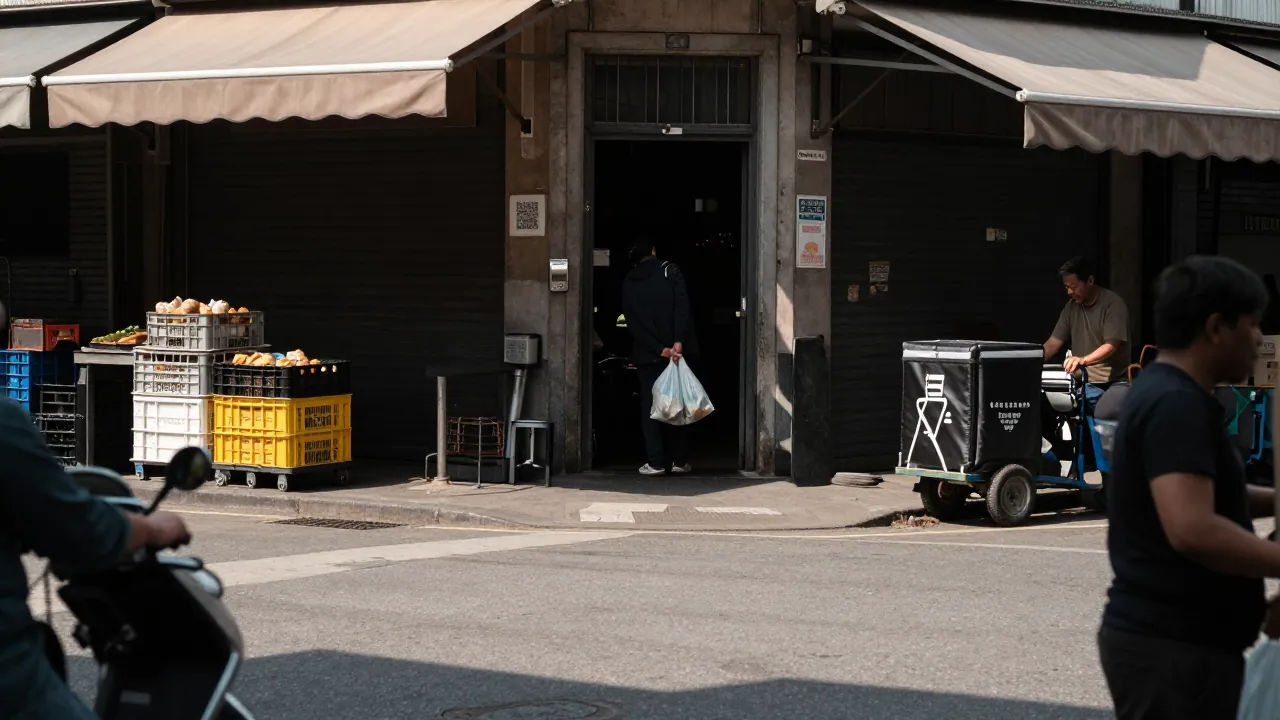
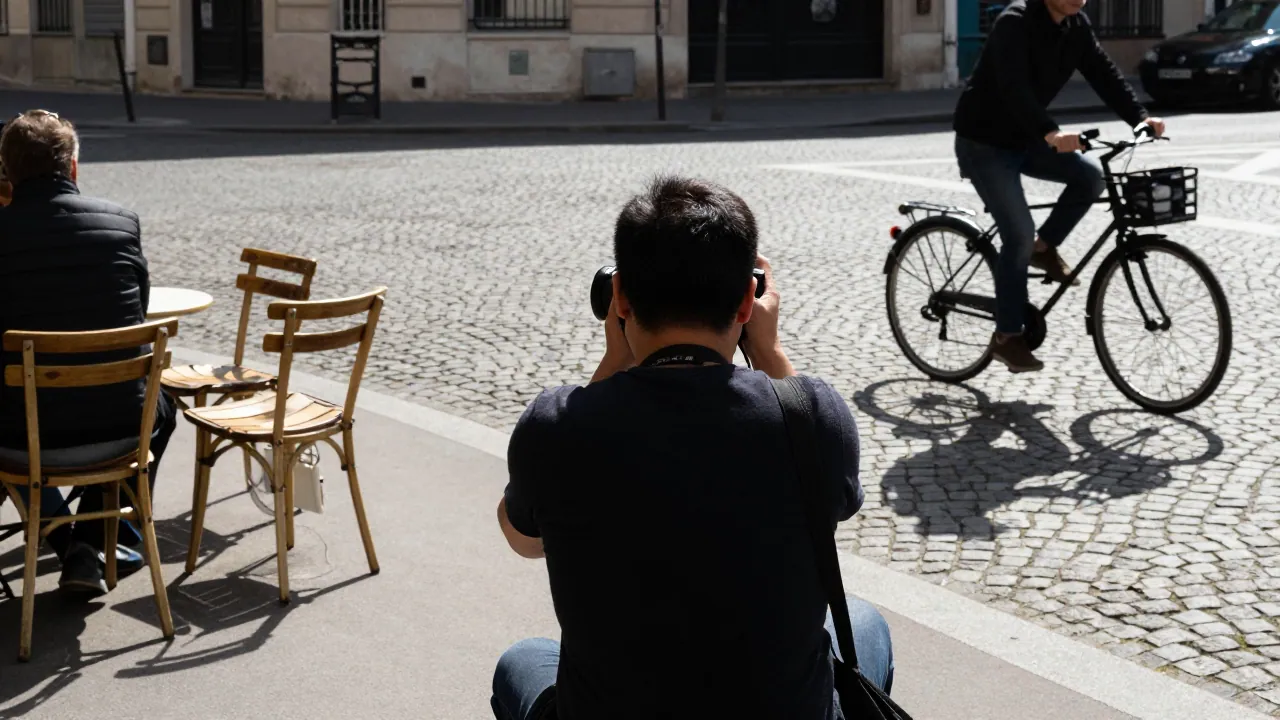
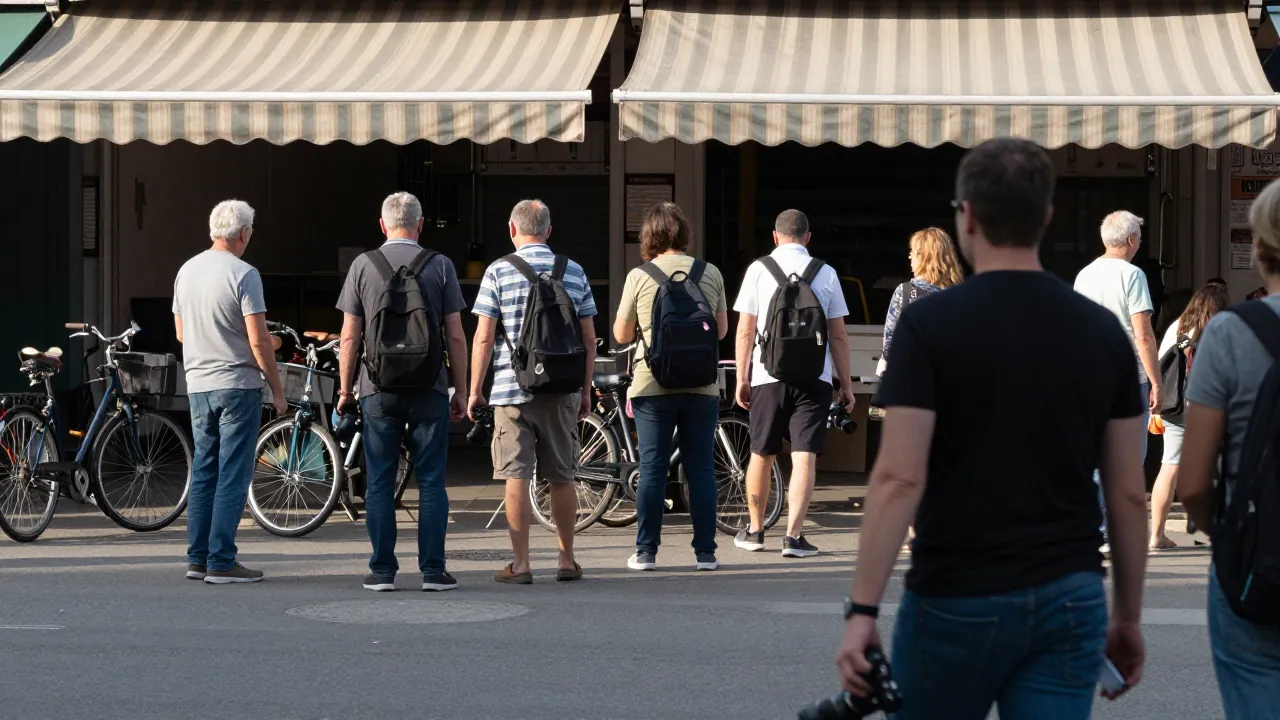
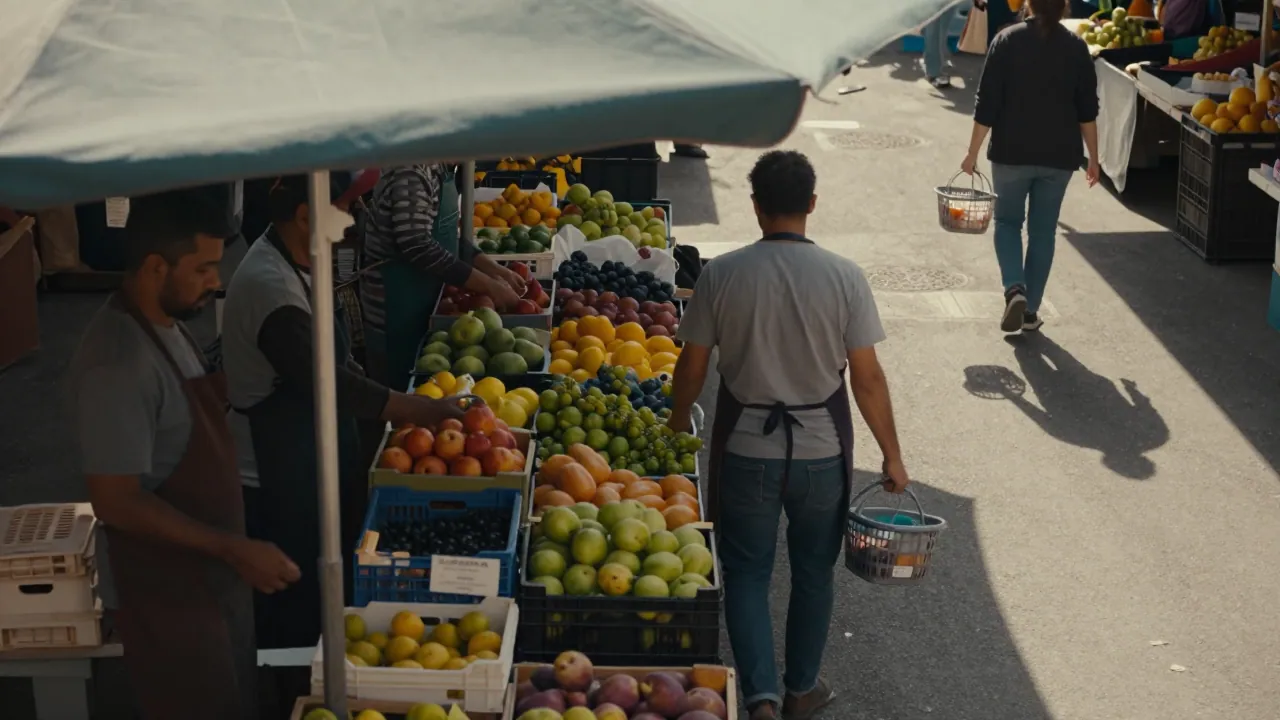
We spend a lot of time in our free workshops standing still. Not because we are shy, but because a street corner rewards the photographer who watches it longer than feels comfortable. At a recent Saturday session near a busy market street, we asked everyone to pick one doorway and stay with it for five minutes before raising a camera. Most people lifted the camera in the first thirty seconds. By the end, the group had learned something simple: the scene tells you when it is ready, if you give it time. This note explains how we practice that patience, what we look for, and how to know when waiting is working. You can also read our framing habits for related ideas.
Why a corner is better than a crowd
A busy street gives you too many choices. A single corner gives you a stage. When we run this exercise, we choose a spot with a clear background and at least two approach lines: one from the left, one from the right, or one across the street. That way, people arrive from different directions and we can see them coming. The point is not to photograph everyone. The point is to understand the pattern of the place before we add our own timing to it.
On a recent walk along a market street, one group watched a bakery doorway for ten minutes. In that time, three people stopped to read the chalkboard, a delivery driver carried two crates inside, and a dog waited outside while its owner bought bread. None of these were dramatic. But the doorway had a rhythm, and once the group saw it, they stopped guessing and started anticipating. That shift, from guessing to anticipating, is the whole exercise.
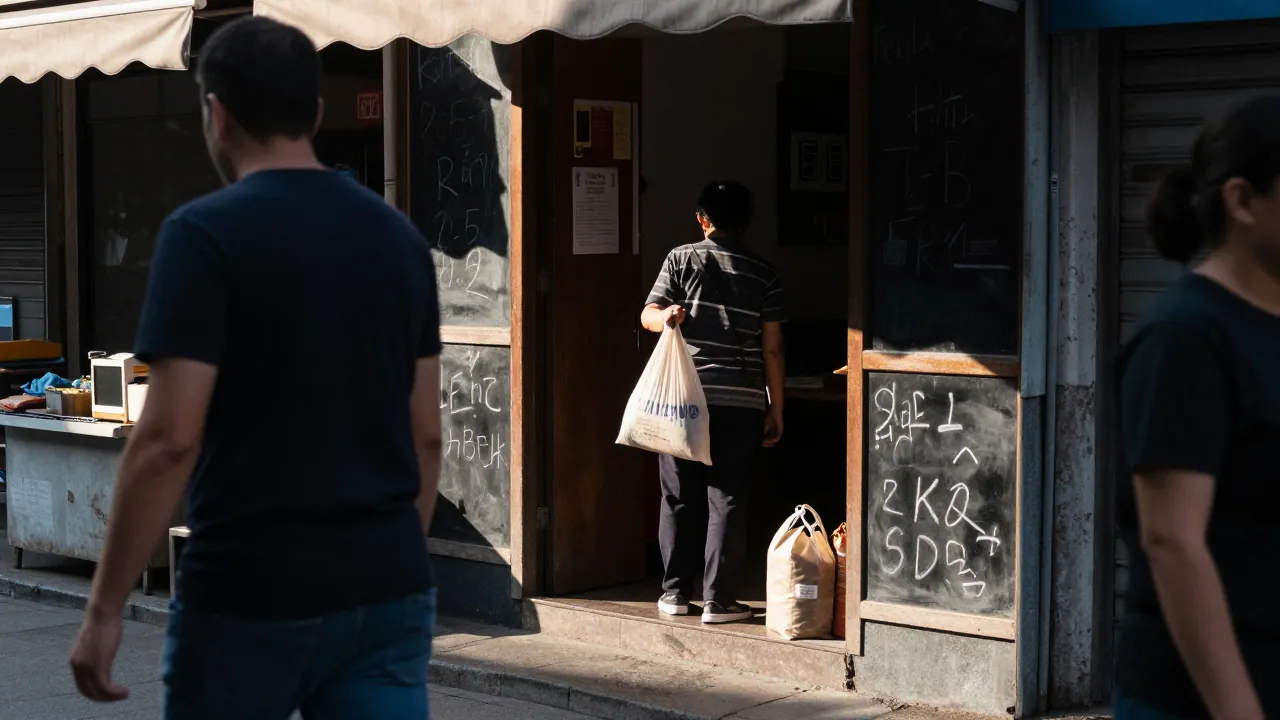
The five-minute watch: what to look for
We ask people to stand in one place for five minutes without taking a photo. That is harder than it sounds. Here is what we suggest you track while you wait:
- Light: where is the bright patch, and how fast is it moving? A doorway that is flat now may have a clean slice of light in four minutes.
- Flow: which direction do most people come from, and where do they slow down?
- Regulars: who passes twice? The person who walks by, turns back, and walks by again is often the one who will stop.
- Obstacles: parked scooters, delivery crates, a queue. These shape the space and tell you where a person will step.
- Background: is there a poster, a reflection, or a repeating shape that needs a person to complete it?
After five minutes, take one photograph. Then ask yourself what changed in the scene since you arrived. If nothing changed, move on. If something changed, stay for five more minutes. The second five are usually better than the first. This is also the logic behind our Saturday photo walks: we build in stillness at a few chosen spots rather than rushing from one street to the next.
Predicting the next move without guessing
Prediction is not magic. It is reading signals. A person walking toward a doorway will usually slow down, check a phone, or adjust a bag before they stop. Someone approaching a market stall will often look at the produce before they look at the seller. A couple will drift apart slightly before one of them turns to point at something. These small changes give you a beat or two of warning. That beat is enough to raise the camera without rushing.
We practice this with a simple drill. Stand across from a doorway and say out loud, quietly, what you think the next person will do. Will they enter, pass, or pause? Most people get it wrong at first, because they watch faces instead of feet. Feet and shoulders tell you more about direction and intention than expressions do at a distance. After ten minutes, the guesses get better. After twenty, you stop guessing and start reading.
| Signal | What it often means | What to do |
|---|---|---|
| Pace slows near the threshold | Likely to stop or enter | Raise the camera, keep the background ready |
| Shoulders turn toward the stall | About to engage with the vendor | Wait for the hands to move |
| Phone comes out at the corner | Pause of a few seconds | Look for a second element to enter the frame |
| Two people drift apart | One will turn or point | Hold the frame, let the gap open |
The table is not a rulebook. It is a way to talk about what we see. When we reviewed frames from the market walk in Belleville, the strongest images were not the busiest ones. They were the ones where the photographer had waited long enough for a second element to arrive: a hand, a shadow, a passing bicycle. You can read more about that approach in what we look for on a market walk.
When to wait, and when to move on
Waiting has a cost. You miss other streets. So we teach a simple rule: give a scene two cycles. A cycle is the time it takes for the light to change noticeably or for the flow of people to shift. If nothing has happened after two cycles, leave. If something has happened, stay for one more. This keeps patience from turning into stubbornness.
We also ask people to notice when they are waiting for a photograph they have already imagined. That is a different activity. It can work, but it often leads to forcing the scene. The better wait is open: you know the background and the light, and you are curious about who will complete it. If you find yourself directing traffic in your head, step away and find a new corner.
The corner does not owe you a photograph. Your job is to be ready when it offers one.
A small exercise to try on your own
Choose a doorway, a bus stop, or a market stall. Set a timer for five minutes and do not take a photo. Write down three things: the direction most people come from, the place where they slow down, and one repeating element in the background. Then take one photograph. Repeat the watch for another five minutes and take one more. Compare the two frames. Most people find the second frame has more room in it, fewer accidents at the edges, and a clearer sense of what the place is like.
If you want to practice with us, our walks are free and open. We usually spend the first part of the morning on a single corner before moving on. That structure came from how our first photo walks changed the way we work, and it still shapes every session. Bring a camera you know well, or a phone. The exercise works either way.
Questions people ask
How long should I watch a corner before shooting?
At least five minutes. That is enough time to see the light move, the flow of people, and one or two regulars. If the scene changes, stay for another five. If nothing changes, move on.
What if people notice I am standing there?
Most people do not. A camera at your side and a relaxed posture help. If someone asks, be honest: you are watching the light. In our experience, a short answer and a smile are enough.
Does this work with a phone camera?
Yes. The exercise is about timing, not equipment. A phone is less conspicuous and often easier to raise without rushing. The same rules apply: watch first, predict, then press.