The Winter Light on Rue des Martyrs: A January Walk
A slow climb up a Paris street in January, when the low sun turns shopfronts into stages and the cold keeps the queues long enough to notice.
On the first Saturday in January we meet at the bottom of Rue des Martyrs at half past nine, and the street is still blue with shadow. By ten the sun has cleared the rooftops on the odd-numbered side and starts to work its way down the facades, catching the gilt lettering on a bakery window, then a stack of clementines, then the edge of a woman's coat as she waits for her bread. Winter light here is not soft. It is low, precise and brief, and it makes people stand still in ways summer never does. We walk slowly, stop often, and try to read the street scene before pressing the button.
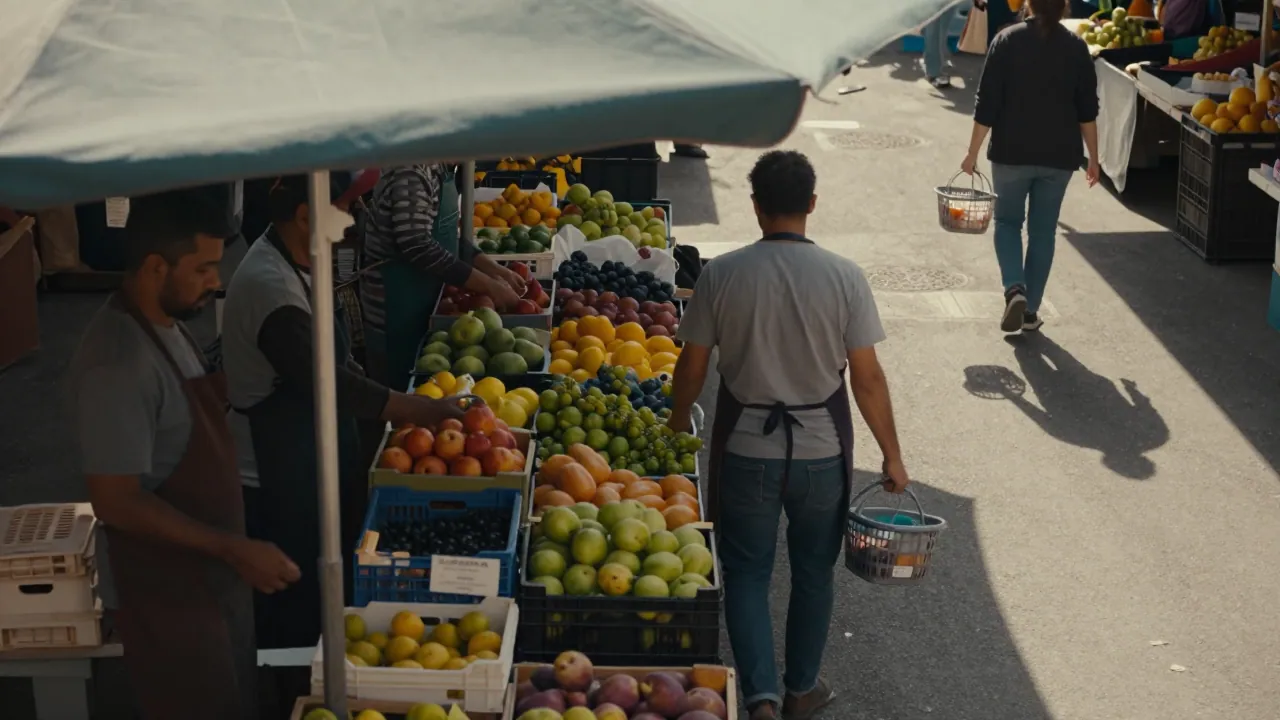
Rue des Martyrs climbs from the 9th into the 18th, and in January it feels like a street with two temperatures. The lower stretch stays cold and shaded until nearly eleven; higher up, near the market, the sun arrives earlier and sits on the awnings. We split into pairs and agree to meet at the top in two hours. Nobody is asked to produce a certain number of frames. The point is to notice what the season does to a place we think we know.
What the cold keeps in place
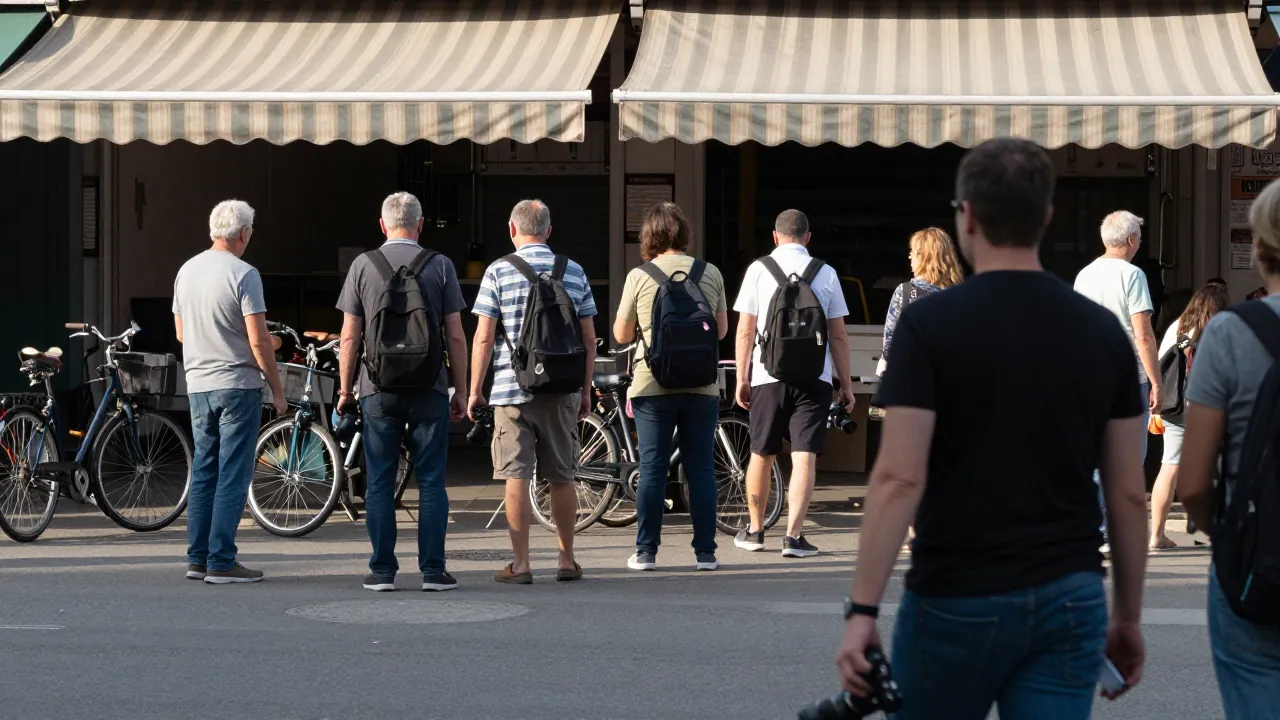
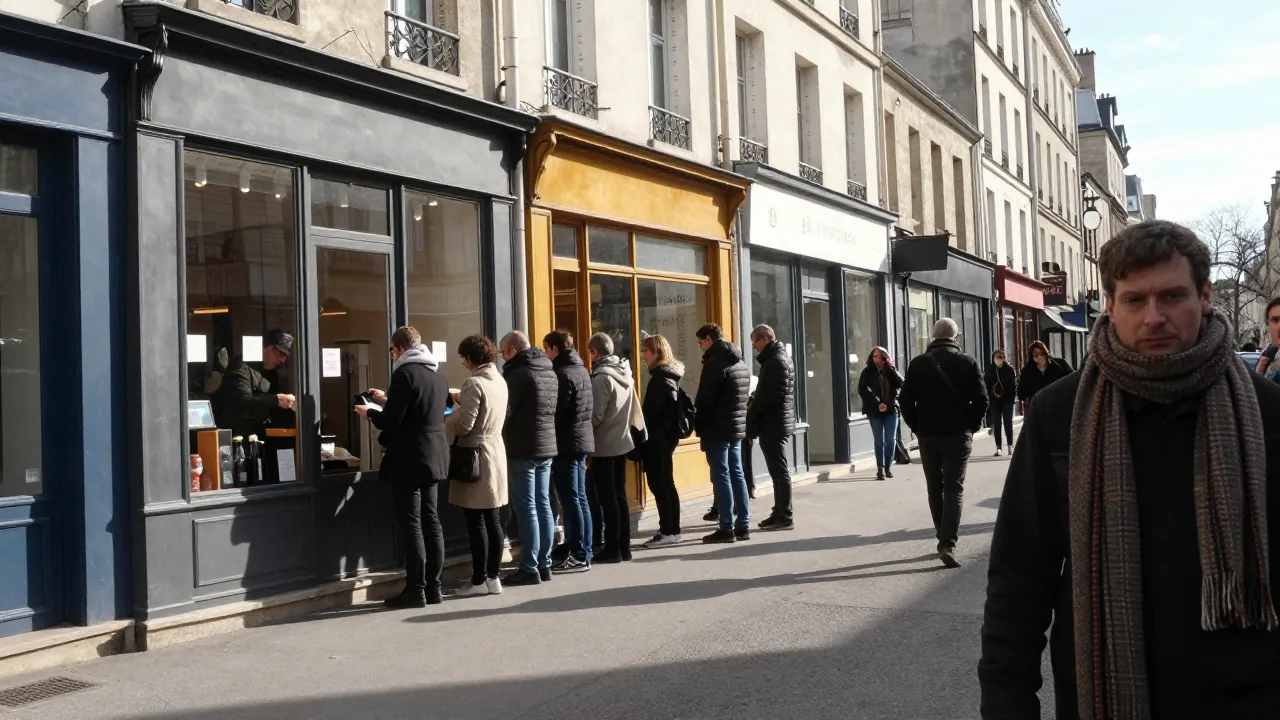
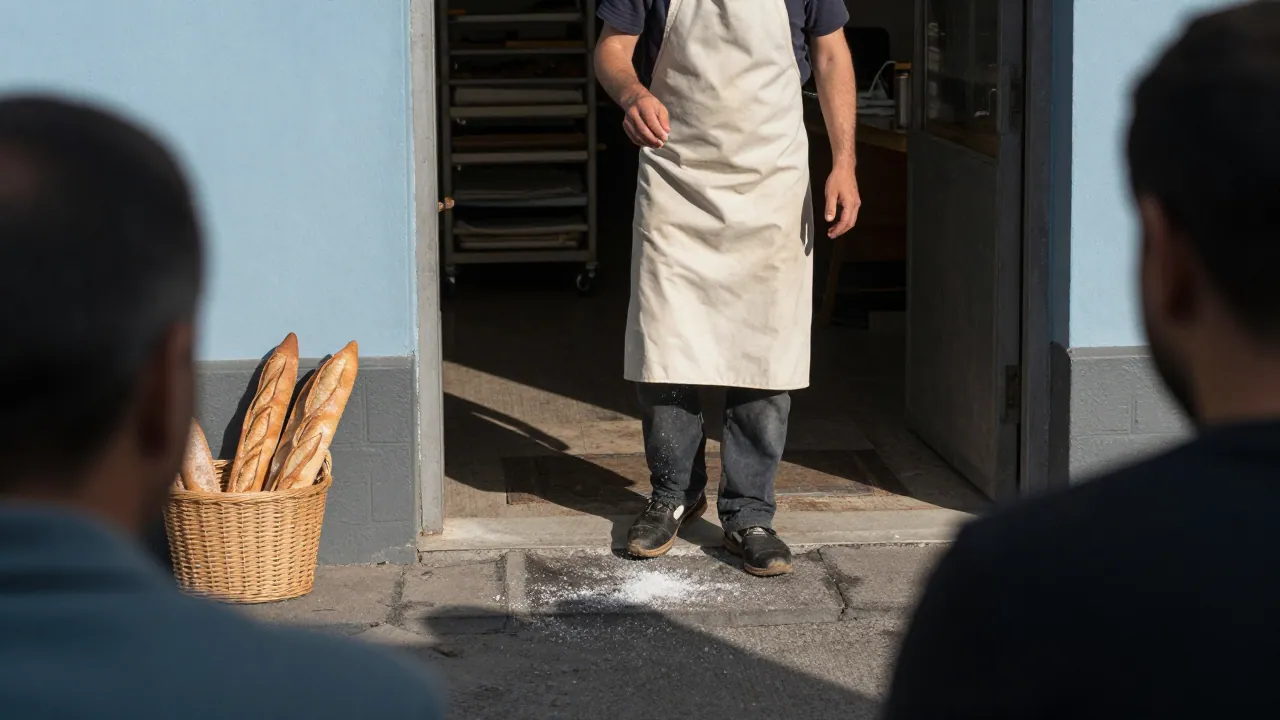
In summer people move through this street quickly. In January they queue, and a queue is a row of faces with time on their hands. Outside the fishmonger, six people stand in a loose line, collars up, looking at their phones or at the ice trays. A man in a flat cap holds a paper bag against his chest like a book. Two women compare the length of their receipts. These are not dramatic scenes, but they last long enough to photograph properly, and that is the gift of the cold.
Priya Shah, who edits and organises for us, walked the upper stretch with a small notebook. "I stopped counting the number of people who turned their backs to the wind and faced the window instead," she says. "That turn is the picture. You get the reflection of the street in the glass and the person's face half-lit, and nobody is performing for you."
The sun as a timer
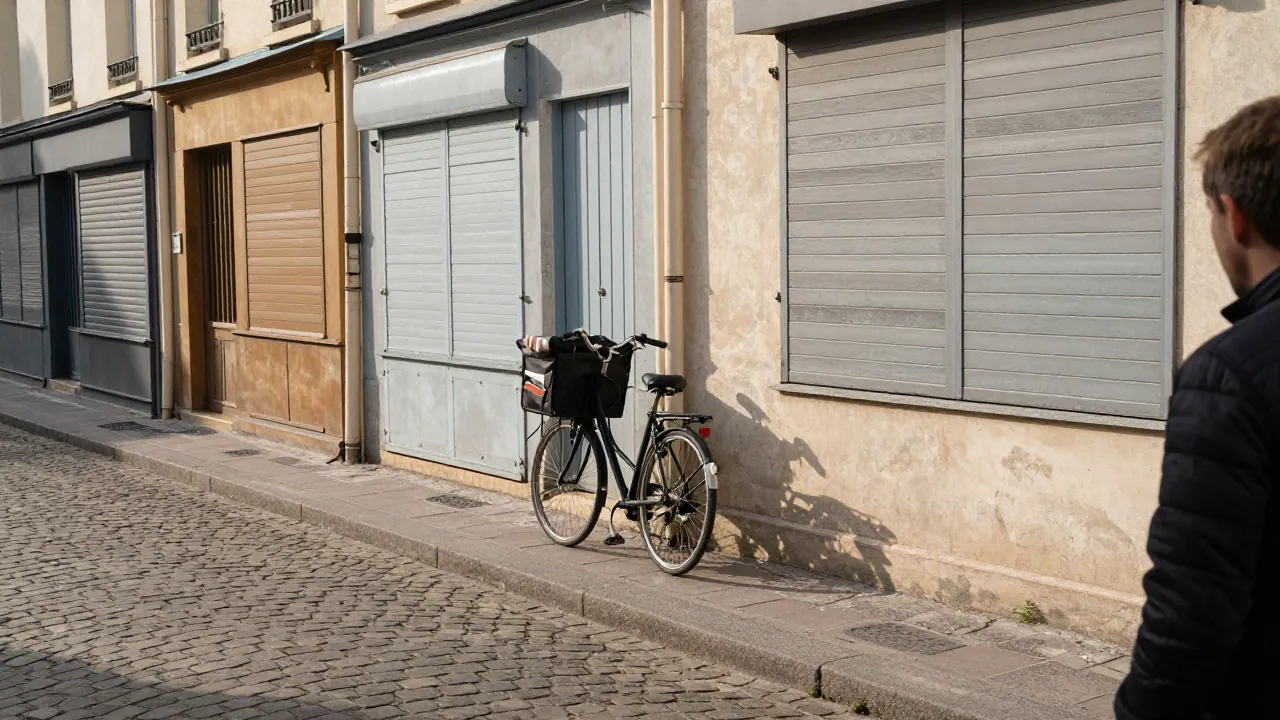
The low winter sun moves fast across a narrow street. On the shaded side, a patch of light might last four minutes on a doorframe and then slide away. We learn to work in short bursts and to leave a scene when the light has gone, rather than waiting for it to come back. It rarely does in the same shape.
- Watch the top of the frame: chimney shadows on a pale wall can be as interesting as the people below.
- Give the light a subject: a hand, a paper bag, a bicycle bell catching the sun for a second.
- When the patch of light moves, move with it. Standing still is how you miss the next frame.
- Cold hands make you slower. Set your exposure before you lift the camera.
This is close to what we practise on our Saturday photo walks, though the winter version is shorter and ends with coffee rather than a second loop. The habit of working with a moving light is one of the framing habits that slow you down, and January is a good month to break it in.
Shopfronts as small stages
The shop windows on Rue des Martyrs are narrow, and in winter they are lit from inside at midday, which makes them glow against the grey. A florist arranges buckets of mimosa just inside the glass; a bookseller stacks returns on a chair by the door; a cheese shop has a handwritten sign about the cold. Each window frames a person at work, and the reflection of the street layers over them. We photograph the windows as much as the people, because the window is where the street and the shop meet.
One of our volunteers, Camille, spent most of the morning on a single doorway. "I wanted the moment someone came out with their coat half on," she said afterwards. "It took nine people. The tenth came out backwards, holding the door for a dog, and that was the frame." The rest of us laughed, but we understood. Winter rewards the patient.
What we brought back
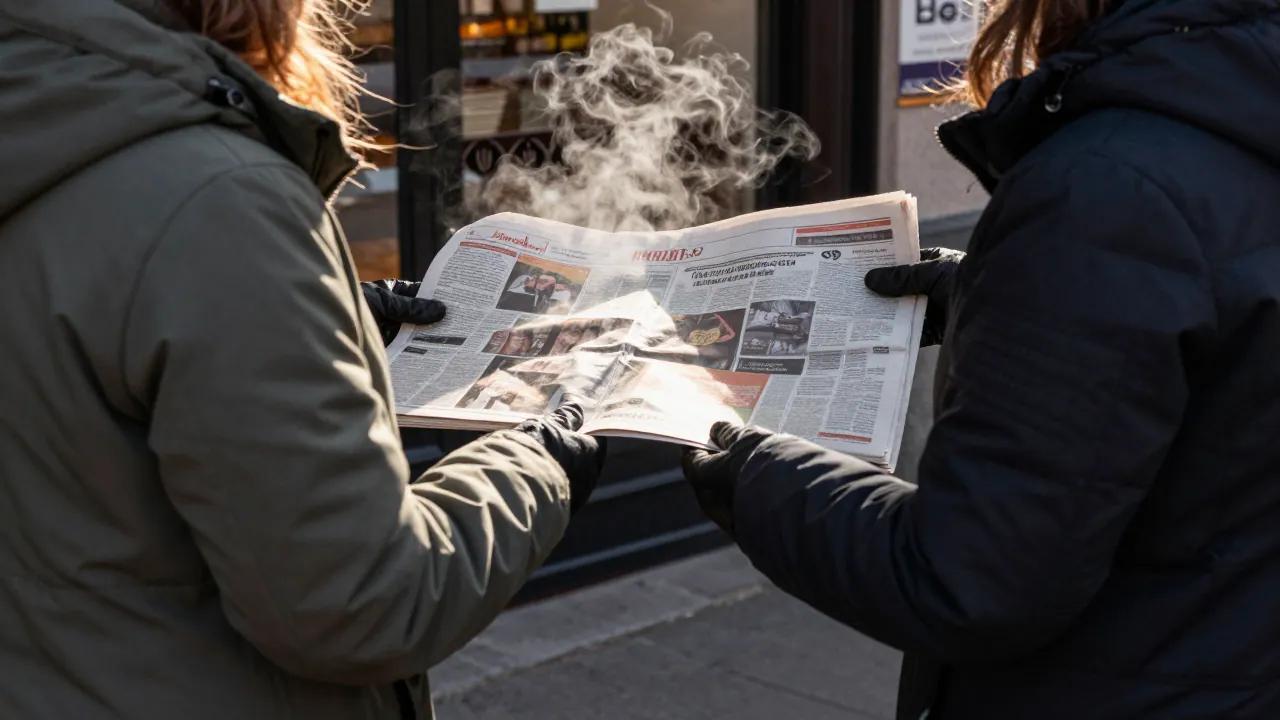
At the top of the street, near the market, we compared a handful of frames on a phone screen. The best ones were not the busiest. They were the ones where the light had done one clear thing: a face turned toward a window, a shadow on a door, a queue held still long enough to become a line of portraits. We talked about how the cold had slowed everyone down, including us, and how that slowness is a technique you can borrow in any season.
If you want to try the same walk, come on a clear morning in January or early February, start low and follow the sun uphill, and give yourself two hours rather than four. Bring gloves you can work in. And when the light moves on, let it go.
Questions people ask
When is the winter walk on Rue des Martyrs?
We run it on the first Saturday of the month from January to early March, starting at 9:30 at the bottom of the street and finishing near the market around noon. Dates are posted on our walks page.
Do I need a professional camera?
No. Most of us carry small cameras or phones. The winter light is strong enough that any camera can catch it, and the walk is about seeing, not equipment.
Is the walk suitable for beginners?
Yes. We walk slowly, stop often and pair people up. Volunteers are on hand to answer questions about exposure, framing and approaching people politely.