How We Photograph a Paris Café Terrace Without Disturbing It
A calm approach for Saturday walks: where to stand, when to ask, and how to leave a terrace as quietly as you found it.
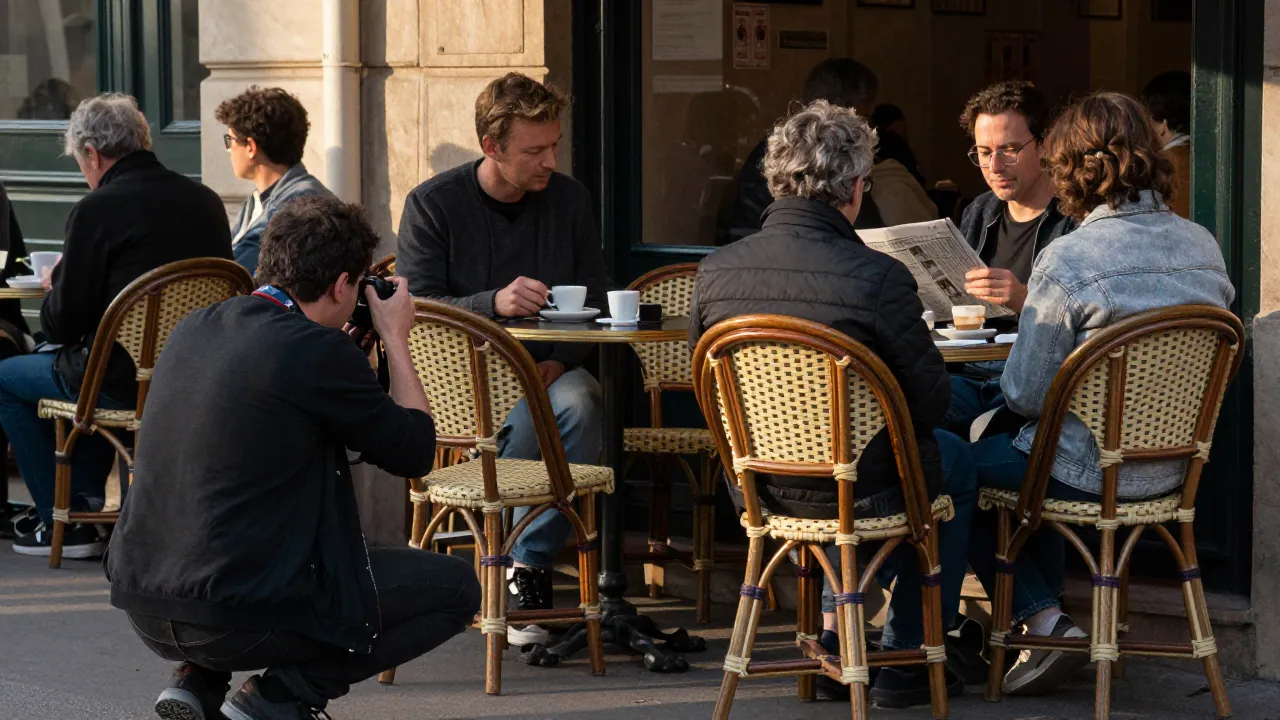
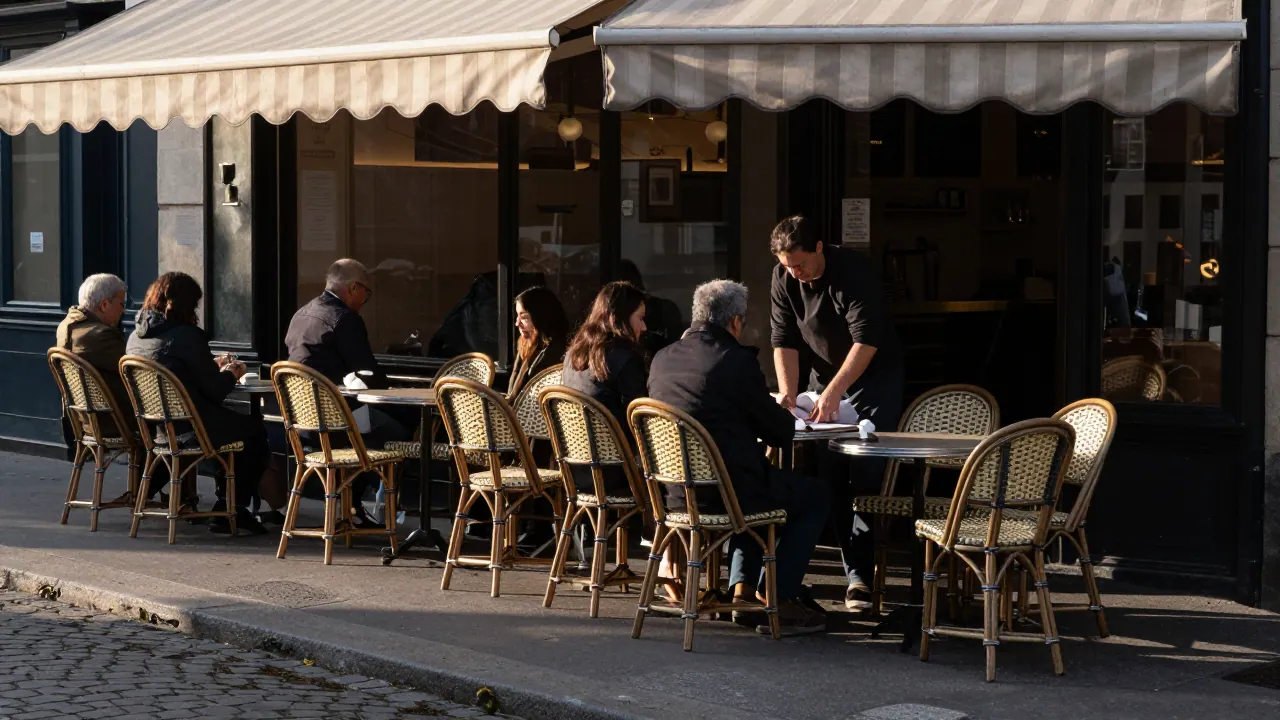
Café terraces are some of the hardest places to photograph in Paris, not because people object, but because everything there is close together: chairs, elbows, a waiter's tray, a cup halfway to a mouth. https://cwdir.org/ On our Saturday walks we spend maybe twenty minutes a morning on a terrace or two, and most of that time is spent standing still. This guide is for anyone who wants the same results without a confrontation or a ruined coffee. It explains where we position ourselves, when we ask, and how we move on, and it works best if you have already read how we join a Saturday photo walk with us.
What follows is the routine we have settled into over several years of walking the same streets. It is not a rulebook, and no one is checking. But it gives a nervous photographer something to do with their hands, which is often the real problem.
Before You Start: What to Carry and What to Leave Behind
A terrace is small and full of things that break. The simpler your kit, the less you will think about it and the more you will see. We ask people on their first walk to bring one camera and one lens, and to leave the bag at home if they can manage it.
- One body and one lens, ideally something between 35mm and 50mm; a longer lens lets you stand further back
- A spare battery already in the camera, because you will not want to open a bag at a table
- A small notebook or your phone for names and notes
- Nothing that beeps, flashes or makes a shutter sound you would not want a stranger to hear
- A coat with pockets, so you can keep your hands free
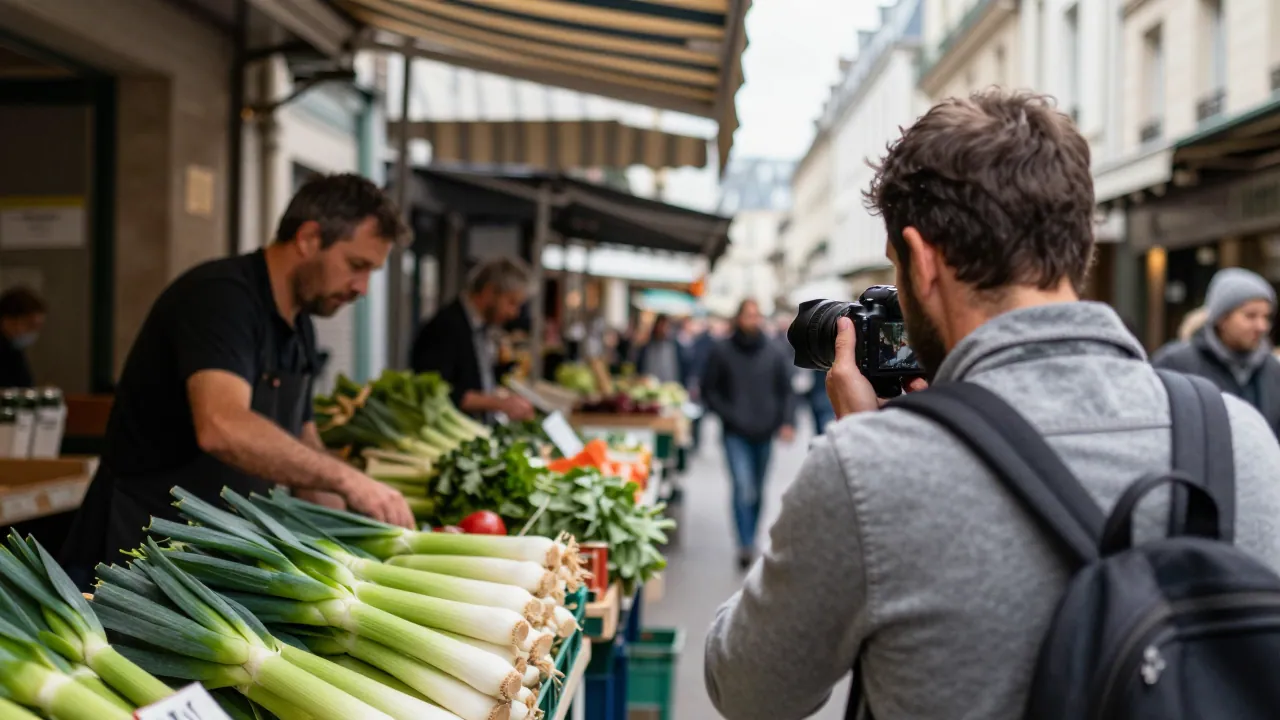
Arrive early. A terrace at nine in the morning is quiet, half empty, and the light is low and soft. By noon the same tables are crowded and the shadows are hard. If you are photographing a specific café, check which way it faces; a north-facing terrace will be in shade all morning, which is easier to work with than a bright one. We cover this same principle with markets in our guide on reading a street scene before you press the button. For a broader directory of street photography resources, see https://cwdir.org/.
Where to Stand
The single most useful habit is this: pick your spot before anyone notices you, and then stay there. Walking past a terrace three times is what makes people uneasy. Standing still at the corner of the pavement, photographing the whole row of chairs at an angle, looks like what it is.
Our default positions, in order of preference:
- Across the street, on the opposite pavement, using the width of the road as your distance
- At the end of the terrace row, where tables turn the corner and you are behind everyone's shoulder
- At the bar inside, if the owners are used to it and you have asked
- Seated at your own table, with a coffee in front of you and the camera within reach but not raised
The seat is underrated. If you order something, sit for twenty minutes, and let the waiter get used to you, you will often come away with the frames nobody standing on the pavement ever gets: hands, cups, the small negotiations between two people at a table. It also means you are a customer, not an observer, which changes how you are treated.
When to Ask, and When Not To
Most terrace photographs do not need permission, because most of them are about the place rather than a single recognizable person. Chairs, cups, reflections in the window, a crowd seen from across the road: none of that requires a conversation. A portrait does. If the frame depends on one person's face filling a third of the image, we ask first.
How we ask, in practice:
- Catch the eye from a distance, not from over their shoulder
- Say plainly who you are and that you are photographing the street today
- Offer to show the frame on the screen afterwards
- Accept a no immediately and thank them anyway
- Do not ask someone mid-conversation, mid-meal, or mid-argument
Two moments are almost always wrong: the first sip and the last bite. Wait for the gap between courses. If a table has a dog under it, or a child asleep in a pram, move on. We never photograph people in visible distress, and we never photograph anyone who has fallen asleep in a chair. The broader habits are in our piece on approaching strangers at a Paris market politely, which applies just as well to a café.
Reading the Mood, and Knowing When to Leave
A terrace tells you within about a minute whether it wants to be photographed. Learn the signs and leave before they become a problem.
| What you see | What it usually means | What we do |
|---|---|---|
| People leaning together, talking quietly | A private conversation | Shoot the tables and the light, not the faces |
| A waiter clearing plates fast | The lunch rush is starting | Leave; the terrace is about to be busy |
| Someone turning their shoulder to you | They noticed and they mind | Put the camera down and walk on |
| Two people laughing at their own table | The mood is open | Stay still and wait for the next gesture |
| A group posing for each other | They are already taking photographs | Ask once, briefly, whether you can take one too |
The last rule is the simplest. If you have photographed a terrace for a while and the mood has changed, you have probably already made the picture. Walk to the next block, and leave the people at the table with their morning. This is the same discipline we use on the quieter corners in where the 11th arrondissement gets quiet after Sunday lunch, and it is one of the habits we keep coming back to.
What We Take Away From a Morning
None of this is complicated, but it does take practice to stand still when you want to move. After a Saturday walk, we usually ask people which terrace they found easiest and which they found hardest, and the answers are almost always about the mood rather than the light. Cézanne said photography would never be art; we suspect he never spent an hour watching a waiter stack chairs. Come along on a Saturday and try one terrace, one coffee, and twenty minutes of not walking anywhere. That is the whole exercise.
Questions people ask
Do I need permission to photograph a café terrace in Paris?
For a wide view of the terrace, generally no; it is a public pavement and you are photographing the scene. For a close portrait of one person, we always ask first, and we accept a no without discussion.
What lens works best for café terraces?
Something between 35mm and 50mm is what most of us use, standing across the road or at the end of the row. A longer lens lets you stay further back, which is easier on everyone, but it also flattens the scene.
How do I join one of your Saturday walks?
Walks are free and open to anyone. Read the joining page for where we meet and what to bring, and arrive a little early so we can start as a group rather than gathering late on the pavement.