On the Bench: How We Photograph Quiet Moments in Paris Parks
A practical guide to noticing people at rest in parks and squares, and making a photograph that respects the pause.
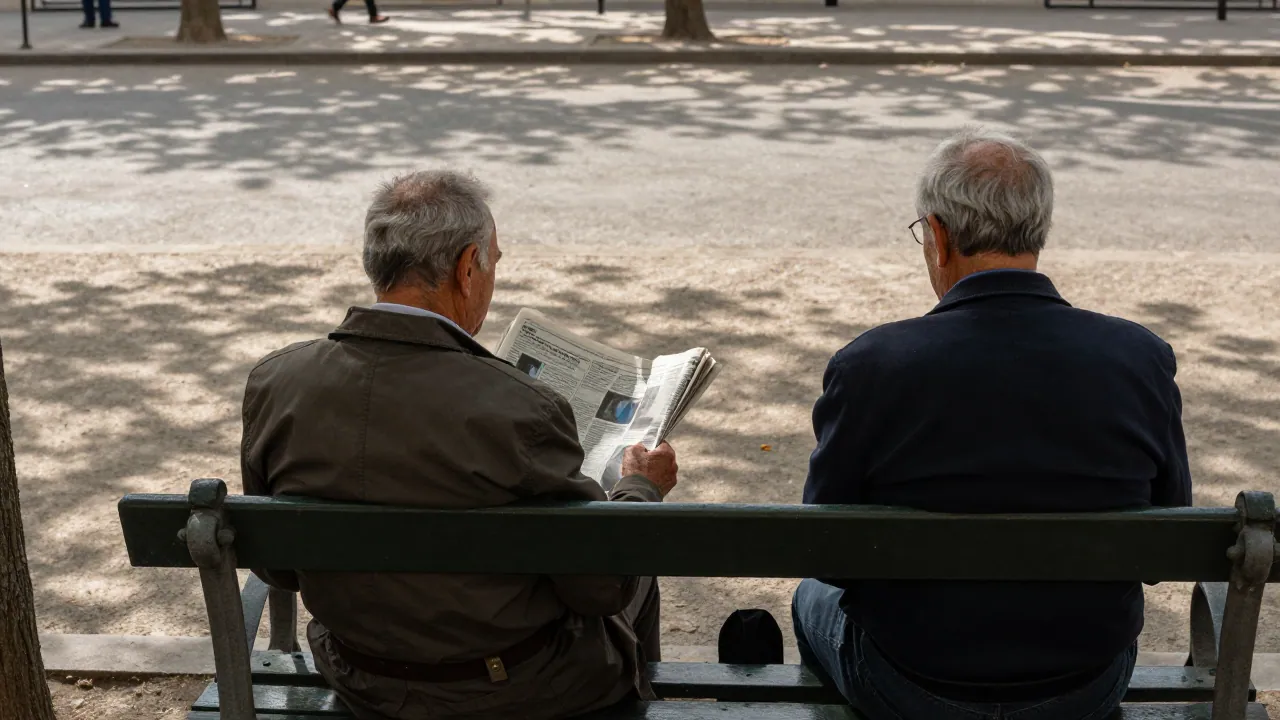
A bench is one of the few places in a city where nothing is supposed to happen. https://halotuziemia.com/ Someone sits down, takes off a coat, opens a paper, closes their eyes. In parks and squares across Paris we have learned to wait for those minutes rather than chase them, and the photographs that come out of that waiting are often the ones we keep. This guide is for anyone who walks with a camera and feels awkward about photographing people at rest. It covers what to carry, how to read a bench before you lift the camera, and how to leave without breaking the moment. We use examples from our Saturday walks, including the quiet streets near Sunday lunch.
Most of our volunteers started by photographing movement: someone crossing a street, a market stall at its busiest. Resting people felt harder, as if we were interrupting something private. After a few seasons of walks through squares and gardens, we changed our minds. A person on a bench is usually not in a hurry, has chosen their spot, and often stays there longer than anyone walking past. That gives you time to think, which is the real skill.
What you need before you sit down
- A camera you can hold at chest height without fuss, or a phone with the screen dimmed
- A lens between 35mm and 50mm, so you stay at a working distance rather than reaching across a lawn
- An hour when the park is half full, not empty and not packed: mid-morning and late afternoon on weekdays work well
- A notebook or phone note to record what you saw, because park frames blur together later
- Clothes that let you stand still without looking like you are waiting for something
You do not need a long lens. From fifteen or twenty steps away, a 50mm frame still includes the bench, the tree behind it and the person's hands. That context is the point. Photographing a face from across a garden flattens the scene into a portrait nobody agreed to.
Reading a bench before you lift the camera
We teach a short checklist that fits in the time it takes to walk past. None of it is about the person's face yet. It is about whether the scene is already arranged. For a wider view of this approach, see our notes on https://halotuziemia.com/.
- Check the light first. Is the bench in shade with sun behind it, or dappled through leaves? A face in flat shade against a bright path usually reads well.
- Look at the background. A row of empty benches, a wall, a line of trees: something simple behind the person lets the pause show.
- Watch the posture. Shoulders down, hands still, a coat folded on the knee. Those are the signs of someone who has settled, not someone about to leave.
- Notice what the person is doing: reading, eating, waiting, sleeping, talking to a dog. That action, not the bench itself, is the photograph.
- Decide your frame edge before you raise the camera, so you are not hunting for it while someone looks up.
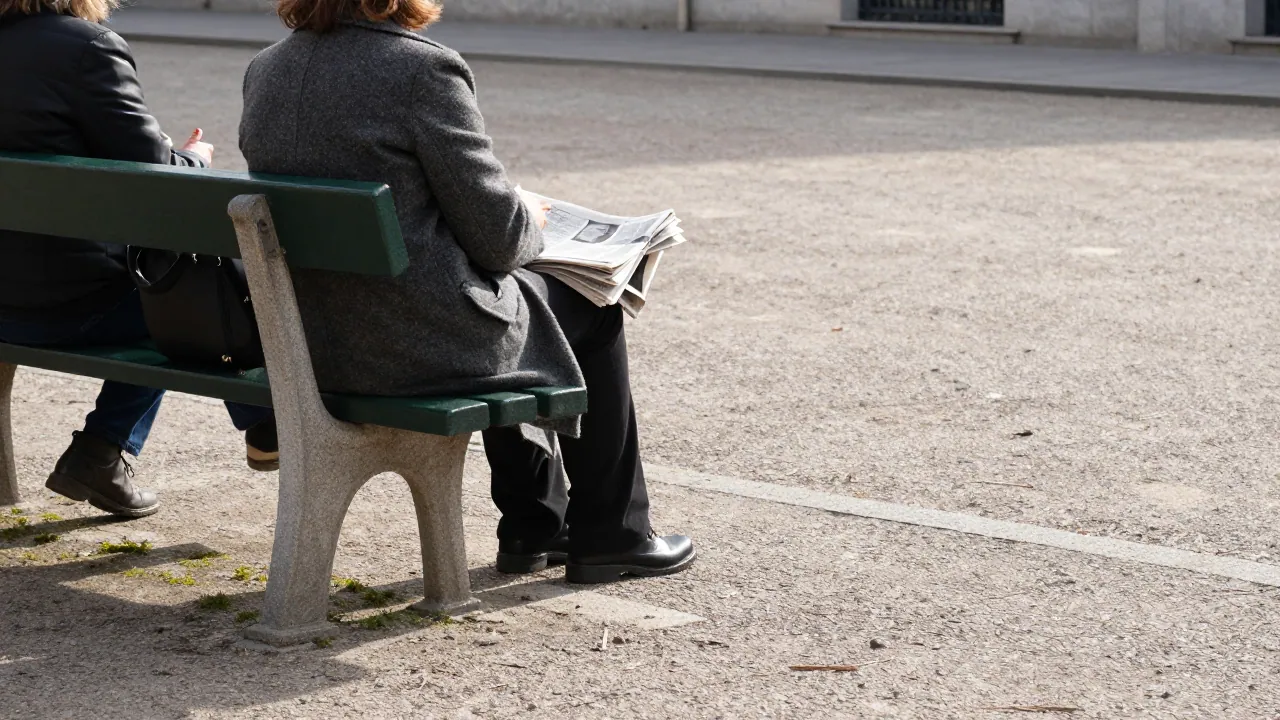
If any of these steps fail, keep walking. There is always another bench, and the next one is often better. On a walk in the 11th, one of our volunteers spent twenty minutes on a single bench and came back with nothing; on the way to the metro she found a man asleep upright with his hat over his eyes and made the frame in four seconds. The checklist is what made those four seconds possible.
Three habits that keep the moment intact
Stop before you are noticed
Approach at an angle, not straight on. Stop at a distance where you are clearly not part of the bench, raise the camera slowly, take one or two frames, lower it. A camera that goes up and down once is forgettable; a camera that hovers is not. This is the same discipline we describe in reading a street scene before you press.
Use the bench as a frame, not a stage
Benches have slats, armrests and shadows underneath. Include them. A person sitting slightly off-center, with the empty half of the bench still in the frame, says more about a quiet afternoon than a tight crop. The same idea guides how we photograph a café terrace without disturbing it: the furniture is part of the story.
Wait for the small event
Almost every good bench photograph we have made includes a small event: a hand lifting a cup, a page turning, a scarf being rewrapped, a pigeon landing near a shoe. These moments last a second or two but they repeat. If you watch a bench for five minutes you will usually get two or three chances.
| Situation | What usually works | What to avoid |
|---|---|---|
| Reading or writing | One frame from the side, book or pen visible | Leaning over the shoulder |
| Sleeping with hat or scarf over the face | Frame the whole posture, keep distance | Close-ups of the face |
| Two people talking quietly | Keep both in frame, stay wide | Standing between them |
| Someone waiting, looking at a phone | Include the bench and the empty space | Waiting until they notice you |
| Feeding birds or a dog | Shoot the hands and the ground around them | Blocking the path |
Our bench work often happens at the edges of a bigger walk. On a market morning, we meet at the same corner, photograph for two hours, then sit down ourselves. That sitting is not downtime. It is where most of the noticing happens. The habits we picked up across years of walking are collected in what changed over ten years of street photography, and they apply directly to a single bench.
Common mistakes and what to do instead
- Standing in one place for too long. Move on after a few frames; a person who sees the same figure still there will change posture.
- Shooting only faces. Hands, feet, coats and bags carry the season and the story.
- Chasing a bench after the person has stood up. The moment has gone; the empty bench is a different, quieter photograph.
- Using a long lens to avoid the conversation. It also avoids the scene, and the picture loses the park around it.
- Editing out the ground. Gravel, leaves and paving are what make the bench feel like a place.
If you want to practice this with company, our Saturday walks always include at least one bench stop, usually in a square where the light falls through trees in the late afternoon. The details of when and where are on the Saturday photo walk page. Bring a camera, wear shoes you can stand in, and plan to spend part of the morning doing nothing at all.
After the frame: what to do next
Lower the camera, look away, and give the scene a few seconds before you move. If you are close enough and the person seems open, a short greeting is enough: say what you were photographing, offer to show the frame on the screen. Most people say yes, some say no, and both answers are fine. If they ask you to delete it, delete it in front of them. Write one line in your notebook about the light and the hour, because a bench photograph from January looks nothing like one from June. Winter light, in particular, does things to a park that no filter can copy; we wrote about that on a January walk along Rue des Martyrs.
The first time I photographed someone on a bench I apologised before I had even taken the picture. Now I wait, I look at the background, and I take one frame. Half the work is deciding not to shoot.
Questions people ask
Is it legal to photograph people sitting in a public park in France?
Photographing in public spaces is generally permitted, but people have rights over their image, especially if a photograph is published. We keep frames that show a person at rest in a public setting, avoid anything intrusive, and delete a picture if the person asks. If in doubt, ask first or do not publish.
How close should I stand to photograph someone on a bench?
Fifteen to twenty steps with a 35mm or 50mm lens is a good working distance. It keeps the bench, the trees and the path in the frame, and it lets the person stay unaware of you. Moving closer changes the photograph into a portrait.
What if the person notices me and looks upset?
Lower the camera, nod, and walk on without taking another frame. You can say a brief word if you are close, but do not argue or explain at length. There will be other benches, and the person's comfort matters more than the picture.